
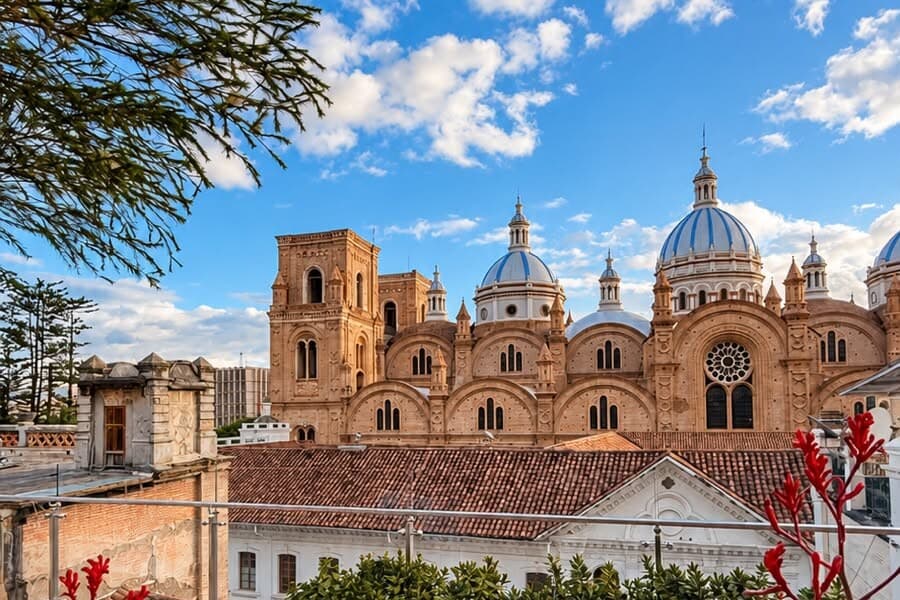
Imagine a traveler arriving in Cuenca to spend a few days walking through its heritage streets, discovering its cuisine and enjoying the architecture that characterizes the Historic Center.
They book a furnished apartment with a kitchen, living room and balcony. They are looking for independence, comfort and the chance to experience the city from a more everyday perspective.
At the end of the stay, however, they find an extensive list of tasks: strip the beds, wash the dishes, take out the trash and leave the accommodation almost ready for the next guest.
The question is inevitable: where does the guest’s responsibility end, and where does hospitality service begin?
This discussion, which has existed among travelers and hosts for years, takes on a new dimension with the changes announced by Airbnb on October 20, 2026.
The measures will take effect for reservations made from November 20, 2026, and are intended to make accommodation conditions clearer, more reasonable and more transparent.
Although this is an international policy, its implications deserve to be examined in the context of Cuenca, where tourist accommodation coexists with residential housing, architectural heritage and real estate investment opportunities.
What is actually changing on Airbnb?
The update reorganizes house rules into seven standard categories: maximum number of overnight guests, quiet hours, events, pets, smoking or vaping, commercial photography and locking up when leaving the accommodation.
Hosts may add further requests, provided that they are reasonable and properly communicated before the booking is made.
One of the most widely discussed changes concerns cleaning. As a general rule, Airbnb states that guests should not be expected to perform tasks requiring considerable effort or tasks that would normally belong to maintenance staff.
Asking guests to place used dishes in the sink, for example, may be considered reasonable. Requiring all dishes to be washed and put away, beds to be stripped or trash to be taken off the property will generally not be.
The policy also limits hosts’ ability to impose their own fines, demand additional contracts and request certain personal information, subject to specific exceptions.
This does not mean that guests can disregard the care of a property. Respect for the rules, the space and the host’s belongings remains essential.
The distinction lies in setting proportionate expectations that are known in advance. Hospitality is not merely about providing a space; it also means taking responsibility for the experience being promised.
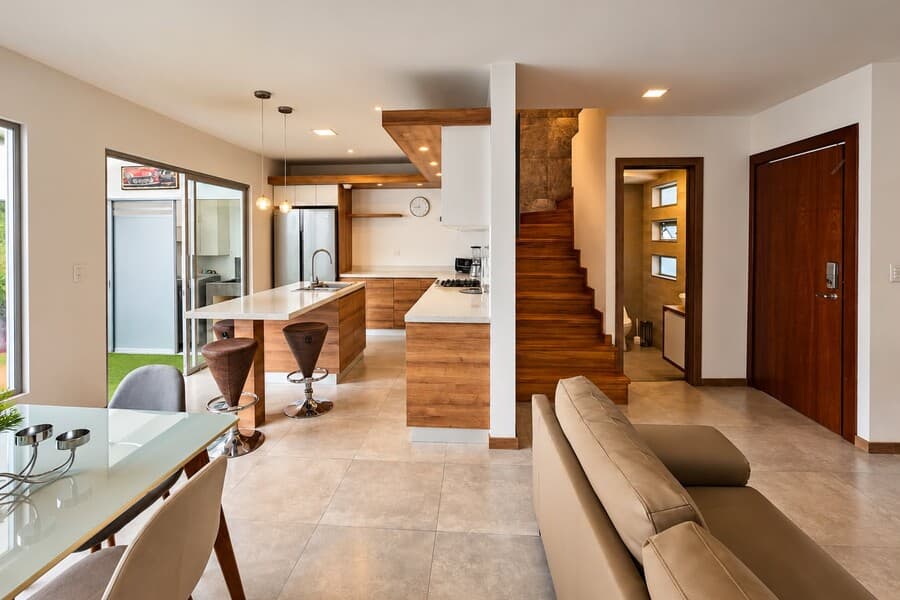
Cuenca: a city where accommodation is part of the experience
Cuenca has qualities that make this conversation particularly relevant. Its heritage architecture, cultural identity, cuisine, traditional markets and neighborhood life are all part of what many visitors come to experience.
For some travelers, a hotel with a reception desk and permanent services is the best choice. For others, staying in an apartment in the Historic Center, cooking with local produce and enjoying a more independent visit offers a different kind of value.
Both models contribute to the tourism offering, although they serve different expectations. Municipal data demonstrate the economic importance of tourism to the city.
Tourism in Cuenca · Founding holiday, April 2026
Source: Municipal Government of Cuenca, April 17, 2026. These figures relate to one specific holiday period; they are neither annual averages nor Airbnb occupancy indicators.
During Christmas and New Year 2025–2026, the Municipality also reported 263,427 visitors and peaks of 100% hotel occupancy. These variations show that tourism demand can change considerably by season.
This distinction is fundamental for an investor: tourism activity in a city does not guarantee that every short-term rental property will be profitable. Location, management, costs and the specific demand for each property remain decisive.
Airbnb versus hotels: competition or complementary choices?
The expansion of accommodation platforms has transformed the options available to travelers. Comparing Airbnb with a hotel, however, requires recognizing an important distinction: Airbnb is a platform that brings together different types of accommodation, ranging from private rooms to entire homes and professionally managed properties.
Hotels, meanwhile, provide service structures that may include reception, regular housekeeping, food and in-person assistance.
| Aspect | Airbnb or short-term rental | Hotel |
|---|---|---|
| Independence | Often greater in entire-home accommodation | Depends on the establishment |
| Kitchen and social areas | Common in apartments and houses | Varies by category |
| Cleaning | According to the booking conditions | Generally included in the service |
| Assistance | Depends on the host and their team | Usually more structured |
| Extended stays | May offer greater residential flexibility | Some hotels offer extended-stay rates |
| Final price | May include cleaning and additional fees | May include taxes and additional services |
| Local experience | Opportunity to live in residential neighborhoods | Experience linked to the hotel’s service and location |
Neither model is superior in every situation. A family visiting Cuenca for two weeks may value separate bedrooms, a kitchen and laundry facilities. Someone arriving for a few days to attend an event may prefer a hotel with reception, breakfast and immediate assistance.
There are also boutique hotels offering experiences deeply connected with local heritage, just as there are short-term rentals that provide services comparable to those of a hotel.
The real competition should not focus on price alone, but on quality, transparency and consistency between what is advertised and what the guest receives.
Who benefits from the new rules?
From the traveler’s perspective, a policy that reduces excessive requests can help create a simpler and more predictable experience.
For responsible hosts, the new provisions may also represent an opportunity. Clear communication, organized processes and consistent services help build trust. Setting appropriate expectations can also prevent conflict and encourage a better relationship between guests and property owners.
Nevertheless, there are challenges. Some hosts will need to review their cleaning processes, redistribute tasks and assess whether their rates properly cover operating costs. Others may need professional support to maintain service standards without compromising profitability.
Contrasting opinions are already visible within Airbnb’s official community: while the platform seeks to simplify the guest experience, some hosts question the restrictions on household tasks, particularly for longer stays.
The debate is legitimate. Managing a private room is not the same as managing an entire home for a family or an apartment intended for monthly rental. This is precisely why professional hospitality requires an understanding of each property’s characteristics and its guests’ needs.
The real estate question: should every property become an Airbnb?
The growth of short-term accommodation also raises questions about land use, coexistence and the availability of residential housing.
In a city such as Cuenca, where heritage buildings, modern apartments, family homes and investment properties coexist, it is important to consider the consequences of each real estate decision.
Converting a home into tourist accommodation can generate income and activity for local suppliers. It also entails greater maintenance needs, occupant turnover, management and regulatory compliance.
In certain markets, a high concentration of homes used for tourism can create pressure on the residential supply. Determining whether and to what extent this occurs in Cuenca requires specific local research; it would not be responsible to attribute concrete effects without that evidence.
Airbnb’s new rules also do not replace any legal, tax or tourism obligations that may apply in Ecuador. Before investing, an owner should consider both the commercial potential and the regulatory conditions applicable to the property.
The question should not simply be how much a property can earn per night. The more important question is which model of use is sustainable for the property, its owner and its surroundings.
Real estate investment: from nightly rate to actual profitability
One frequent mistake when evaluating a property for short-term accommodation is to multiply an estimated nightly rate by thirty and treat the result as monthly income.
In practice, profitability depends on many more variables. Effective occupancy, high and low seasons, platform commissions, cleaning, utilities, maintenance, furniture replacement, applicable taxes and management all need to be considered.
The time required to answer enquiries, coordinate arrivals and departures, solve unexpected problems and maintain a consistent experience also matters.
A property with an attractive nightly rate may generate less net profit than a stable residential rental when costs and vacant periods are high.
The choice between tourist rental, medium-term accommodation and a traditional lease should therefore result from an individual assessment rather than a trend. For heritage properties, maintenance and conservation must also form part of the analysis from the outset.
A LONG-TERM PERSPECTIVE
Towards more thoughtful hospitality in Cuenca
Airbnb’s new policies can be read as a sign that expectations surrounding tourist accommodation are evolving. Travelers seek authentic experiences, but also clarity, comfort and reliable service.
Property owners want to protect their investments and generate sustainable income. Hotels need to differentiate their offerings, while cities face the challenge of promoting tourism without losing their identity or compromising residents’ quality of life.
These needs do not have to be incompatible. Cuenca possesses the cultural, architectural and human qualities needed to build a diverse hospitality offering. The challenge is to develop it with sound judgment, responsibility and a long-term vision.
From Studio Tamara Hidalgo’s perspective, real estate curation begins precisely there: in understanding that every property has an identity, every person has different needs and every real estate decision produces effects that extend beyond a transaction.
Airbnb’s update will not resolve the challenges of tourism or the local real estate market by itself. It does, however, offer an opportunity to reconsider how spaces are managed, what is promised to guests and how value is created through the experience.
Because the future of hospitality depends not only on where we stay, but on how spaces respond to people, place and new ways of traveling.
FROM READING TO DECISION
Which model makes sense for your property?
Short-term rental, medium-term accommodation or a residential lease: the right choice depends on the property, its costs, its location and your objectives. I can help you assess its potential through both a real estate and hospitality perspective.
Sources mentioned
- Airbnb, update to house rules announced on October 20, 2026.
- Municipal Government of Cuenca, tourism figures published on April 17, 2026.
- Municipal Government of Cuenca, Christmas and New Year 2025–2026 tourism report.